Our Victorian development and delivery process moves projects from origination to operations through documented gates — each with accountable owners, lender-grade records and realistic schedule assumptions.
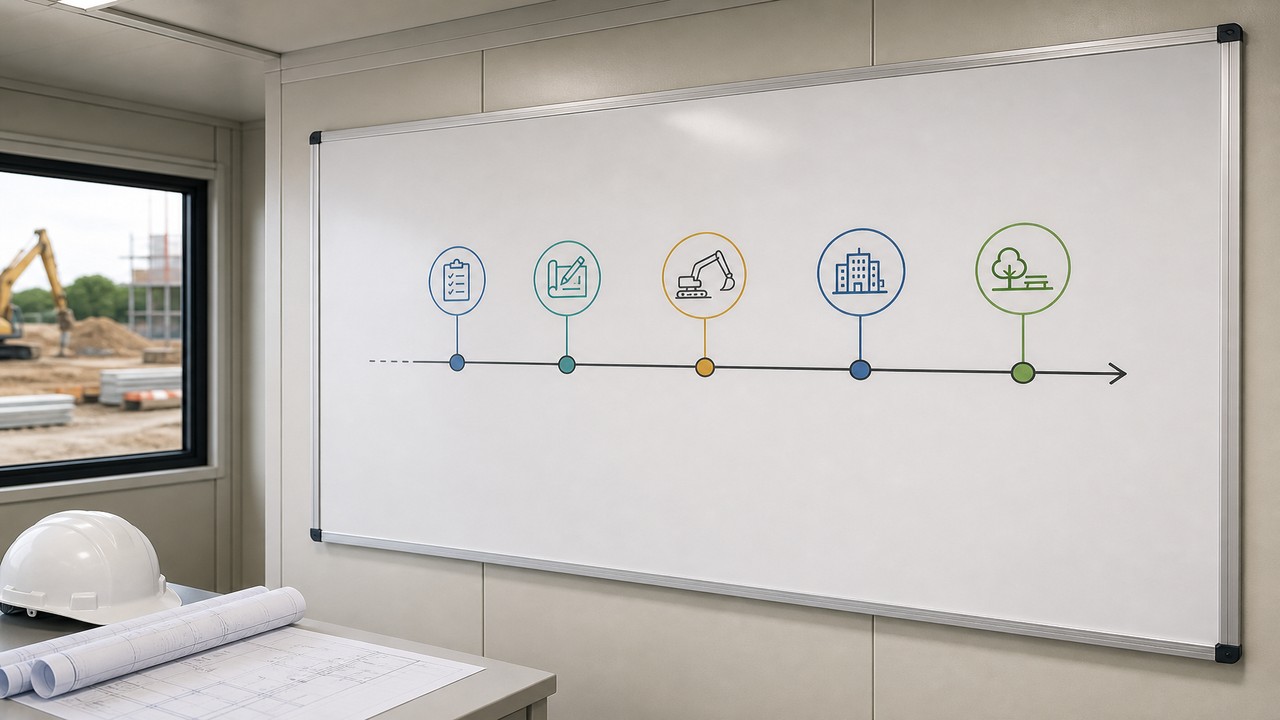
Stage 1: Origination and screening
We assess land or host suitability using GIS constraints, solar resource, access, flood and bushfire risk, cultural heritage triggers and proximity to network assets. Fatal flaws surface before exclusivity payments. Landowners receive plain-language summaries of what a project would require — not materials implying approval is certain.
Stage 2: Feasibility and grid engagement
Feasibility consolidates yield ranges, capex class estimates, connection pathway and planning risk. DNSP or TNSP applications lodge early where data supports a credible case. Limit equation and dynamic study outcomes inform layout and inverter sizing before financial close.
Stage 3: Planning and environment
Planning strategy aligns with local scheme requirements, referral authorities and community engagement proportionate to scale. Environmental studies, offsets and conditions are tracked in registers suitable for acquirer diligence. Commercial hosts follow analogous rigour for building permits and structural certification.
Stage 4: Financial close and contracting
Investment decisions rely on transparent models — realistic curtailment, degradation and O&M cost. EPC contracts define scope, milestones, liquidated damages and testing protocols. We segregate development spend from construction budgets so owners see commitment points clearly.
Stage 5: EPC execution
Construction follows integrated schedules linking civil, mechanical and electrical contractors. Procurement uses approved vendor lists with incoming inspection. Hold points and non-conformance reports are closed before energisation authorisation. Commercial sites add live-operations coordination daily.
Stage 6: Commissioning and registration
Staged testing verifies protection, SCADA and performance against registered parameters. AEMO milestones are planned alongside physical works. Hosts and investors receive commissioning reports and punch-list status before practical completion certificates.
Stage 7: Operations transition
O&M manuals, warranty files and SCADA credentials transfer to the asset owner or our operations team. KPIs — availability, performance ratio, safety — are baselined for ongoing reporting. Hybrid assets add market bidding parameters and battery operating envelopes agreed with the DNSP.
Application across project types
Utility farms emphasise connection and vegetation pathways. Commercial portfolios batch engineering but individualise structural sign-off per roof. BESS projects add fire safety and hazardous materials planning. Explore utility farms, commercial projects and the full pipeline.
Governance and documentation
Each gate produces defined outputs: study reports, board or investment committee packs, contractor scopes, test sheets and registration evidence. Version control and sign-off names are recorded for audit. This discipline supports refinancing, portfolio sales and insurer renewals without reconstructing history from email threads.
Risk management integration
Schedule, cost, grid, environmental and safety risks are logged with owners and mitigations. Escalation paths are clear when DNSP timelines slip or weather interrupts construction. Commercial programmes add production-interruption risk registers agreed with site management.
Discuss a site: request a quote, connect@solarpowerstations.net, 03 8376 0881, 806/176 Wellington Parade, East Melbourne VIC 3002.
Frequently asked questions
What are your development stage gates?
Feasibility, grid application, planning approval, financial close, construction, commissioning and operations—each with defined exit criteria.
Can stages overlap?
Limited overlap only where risk is controlled—for example long-lead equipment after planning confidence, not before DNSP position is clear.
What kills projects at gate review?
Unresolved connection, uncredible offsets, unsafe constructability or misaligned investor timelines—we decline rather than push optics.
Related projects
Quick enquiry
Quick enquiry —we respond within two business days. For full site details use request a quote.
Explore representative delivery
Six published case studies across utility, commercial and storage.