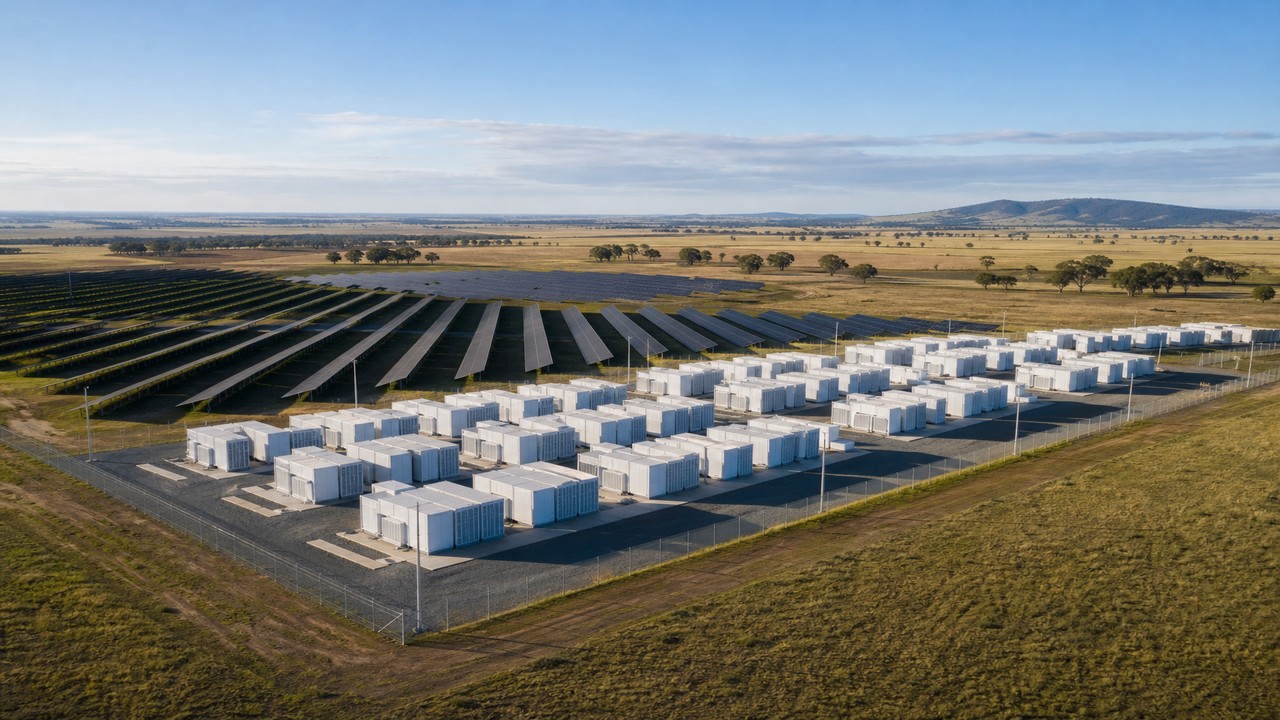
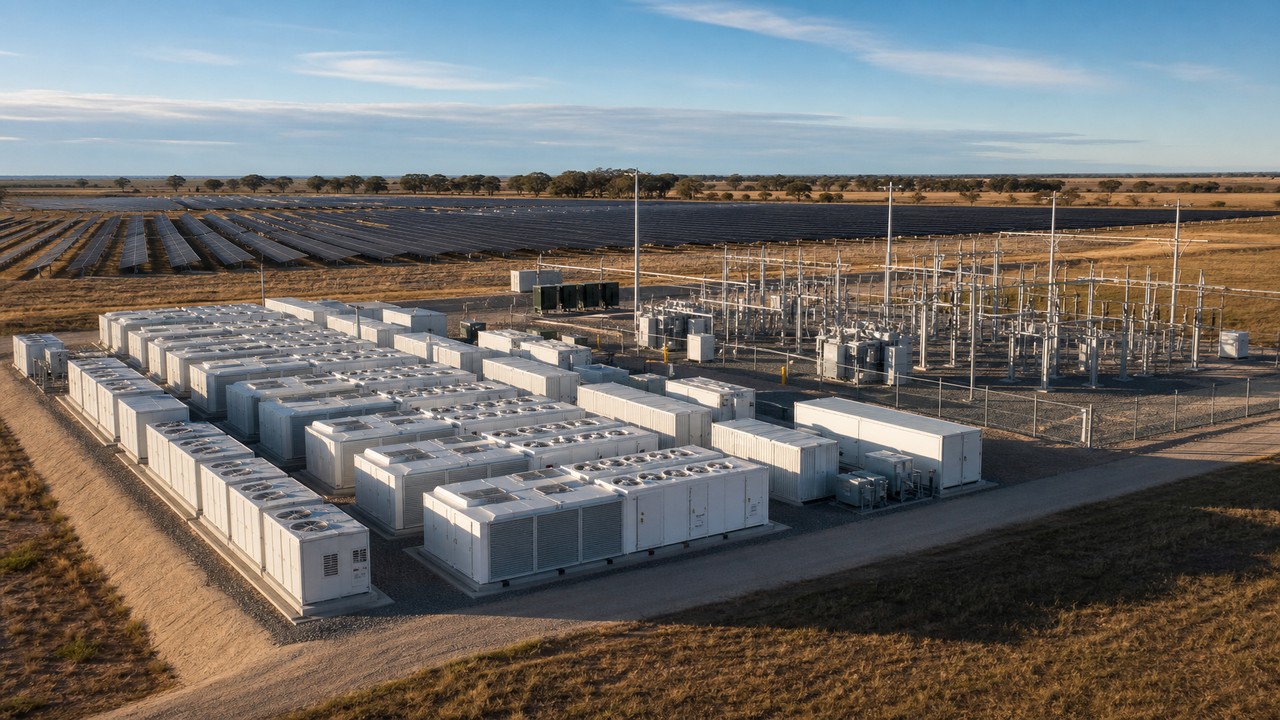
50 MW solar co-located with 100 MWh BESS—unified fire engineering, shared switchyard design and NEM bidding strategy aligned to Victorian DNSP rules.
Challenge
Hybrid registration required coordinated solar and storage protection studies, thermal envelopes and market interfaces—siloed designs would have failed commissioning.
Solution
Single SCADA philosophy, joint commissioning tests and conservative revenue stacking assumptions agreed before financial close.
| Solar | 50 MW AC |
|---|---|
| Storage | 100 MWh / 50 MW |
| Location | Wimmera, Victoria |
| Role | Hybrid EPC & commissioning |
| Status | Operational |
Challenge
Co-location shared land and permits but not automatic connection simplicity. Battery thermal management, container separation and CFA planning sat alongside solar civil works. Fire water and access roads had to serve both technologies without duplication.
Market registration categories for hybrid plant required early clarity on metering hierarchies.
Our approach
We unified inverter and battery control setpoints, specified metering boundaries for settlement, and bench-tested FCAS response before market bidding. Vendor interfaces were reduced to a single SCADA master to limit cyber attack surface.
Commissioning included coordinated solar curtailment tests while batteries provided FCAS previews.
Outcomes
Hybrid plant operational with documented availability derates and operator runbooks. Investors received sensitivity bands rather than single-point merchant promises. First-year operations confirmed hybrid dispatch rules within warranty limits.
Technical resolution detail
Thermal modelling informed container spacing and HVAC setpoints before summer commissioning. We rejected layouts that met datasheet minimums but failed walk-around maintenance access during 40°C Wimmera heat events.
Metering hierarchy was agreed with the DNSP and AEMO registration teams before hardware delivery, avoiding costly retrofit of settlement-grade meters. FCAS prequalification tests were scheduled with market operations staff to confirm response times under simultaneous solar curtailment.
Measured results
- 50 MW solar and 100 MWh BESS commissioned with integrated SCADA and witness-tested protection
- FCAS and energy dispatch within modelled availability bands in first operational year
- Single emergency response plan covering both technologies for CFA and council
- Investor reporting includes transparent curtailment and outage logging
Lessons for hybrid developers
Unified SCADA and single operations runbook reduced interface disputes between solar and BESS vendors. Revenue models now stress-test FCAS and energy simultaneously rather than assuming nameplate availability across all products.
Project FAQ
Why unify SCADA?
Single master reduces cyber surface and prevents conflicting dispatch between solar and BESS vendors.
How was thermal risk managed?
Container spacing and HVAC setpoints validated for Wimmera summer peaks before commissioning.
How are revenues reported?
Sensitivity bands for energy and FCAS—not single-point merchant promises.
Explore related work
Discuss your project
Share site or portfolio context for structured assessment.