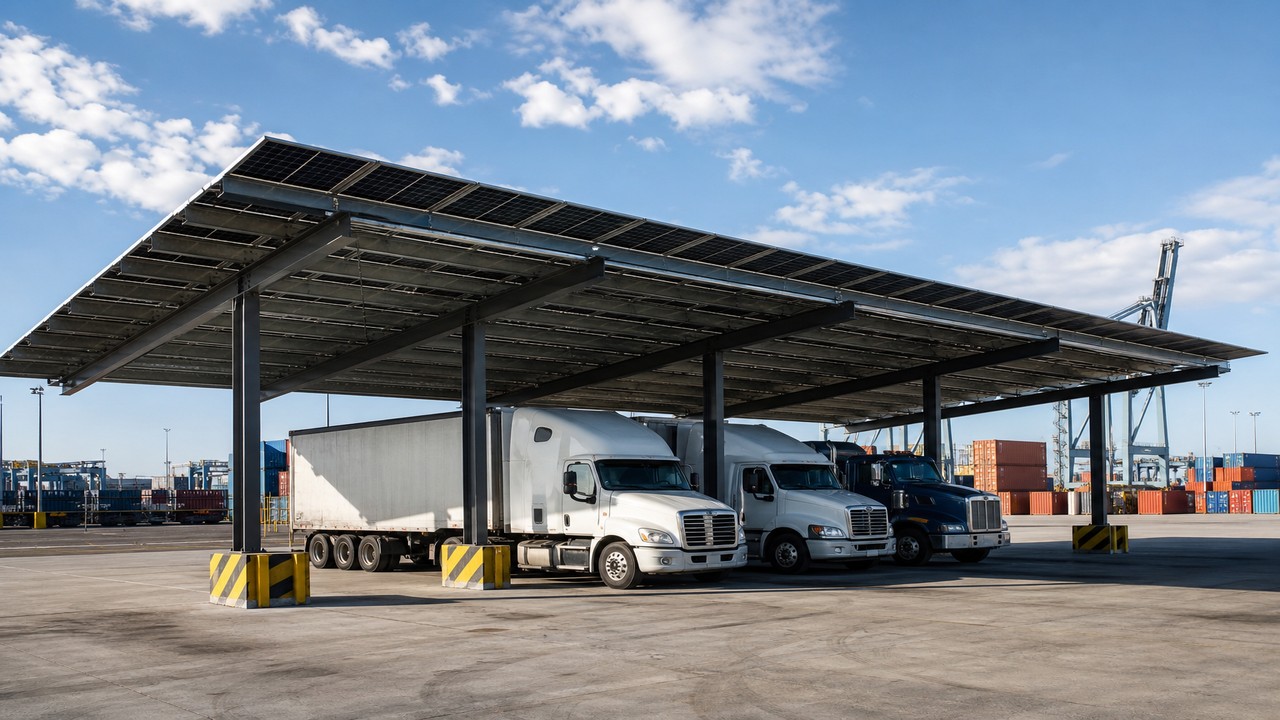
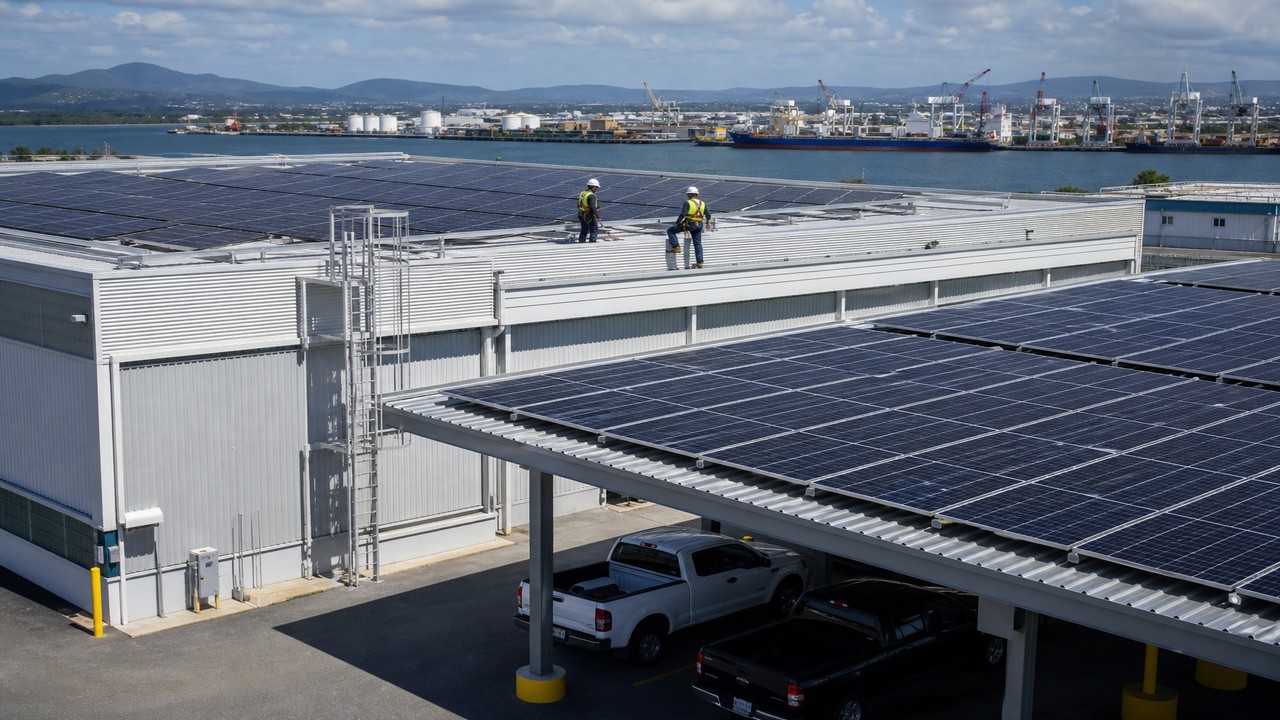
2.1 MW carport and rooftop solar at a working port—marine corrosion protection, crane clearance and 24/7 berth operations coordinated without safety incidents.
Challenge
Salt exposure, heavy vehicles and continuous berth activity ruled out conventional installation methods and standard mounting specifications.
Solution
Corrosion-rated hardware, protected cable routes, marine safety coordination and maintenance windows tied to berth schedules.
| Capacity | 2.1 MW |
|---|---|
| Configuration | Carport + rooftop |
| Location | Geelong port precinct, Victoria |
| Role | Commercial EPC |
| Status | Operational |
Challenge
Port environments degrade equipment faster than inland rooftops. Crane sweeps and vehicle paths constrained combiner placement and cable routing. Tenant green-lease clauses required traceable monthly MWh attribution.
CFA marine inductions and berth coordination meant standard weekend-only construction was impossible—we built a live operations interface with port safety officers.
Our approach
We specified coatings and enclosures for marine exposure, staged lifts outside peak vessel movements, and integrated export metering with tenant green-lease reporting needs. Cable routes were buried in ducts where heavy vehicles turn.
Thermal imaging after energisation confirmed no hot spots on terminations exposed to salt spray.
Outcomes
Asset supports operator decarbonisation pathway with uptime bands meeting berth operations. Maintenance plans respect marine safety induction requirements and crane clearance re-checks after extreme weather.
Host reports savings within modelled bands and uses data in port authority sustainability disclosures.
Technical resolution detail
Module frames and mounting hardware were specified for C4 marine exposure with inspection intervals aligned to salt deposition rates observed during pre-construction monitoring. Carport columns were positioned outside crane sweep envelopes verified with port engineering.
Tenant sub-metering was configured so green-lease reporting could attribute MWh by berth and warehouse tenancy without manual spreadsheet reconstruction each month.
Measured results
- 2.1 MW carport and rooftop portfolio operational without unplanned berth closures
- Thermal inspections confirm terminations within limits after first summer
- Tenant attribution reports accepted in port sustainability disclosures
- Maintenance programme integrated with marine safety induction renewals
Lessons for marine-adjacent solar
Coating inspection intervals are now tied to observed salt deposition rather than generic annual schedules. Port coordination meetings are scheduled around vessel movements before crane lifts—not only around weather windows.
Tenant metering architecture proved as important as module selection for green-lease credibility; future port programmes budget SCADA and reporting integration in feasibility, not at handover.
Project FAQ
How was marine corrosion handled?
Coatings and inspection intervals tied to observed salt deposition, not generic annual schedules.
How were crane zones protected?
Carport columns placed outside verified sweep envelopes with port engineering.
How is tenant reporting delivered?
Sub-metering configured for green-lease MWh attribution by berth and tenancy.
Explore related work
Discuss your project
Share site or portfolio context for structured assessment.